

Cleaners
Atmosphere X takes a proactive approach to energy savings and indoor air quality enhancement.
Top 5 BioDissolve FAQs
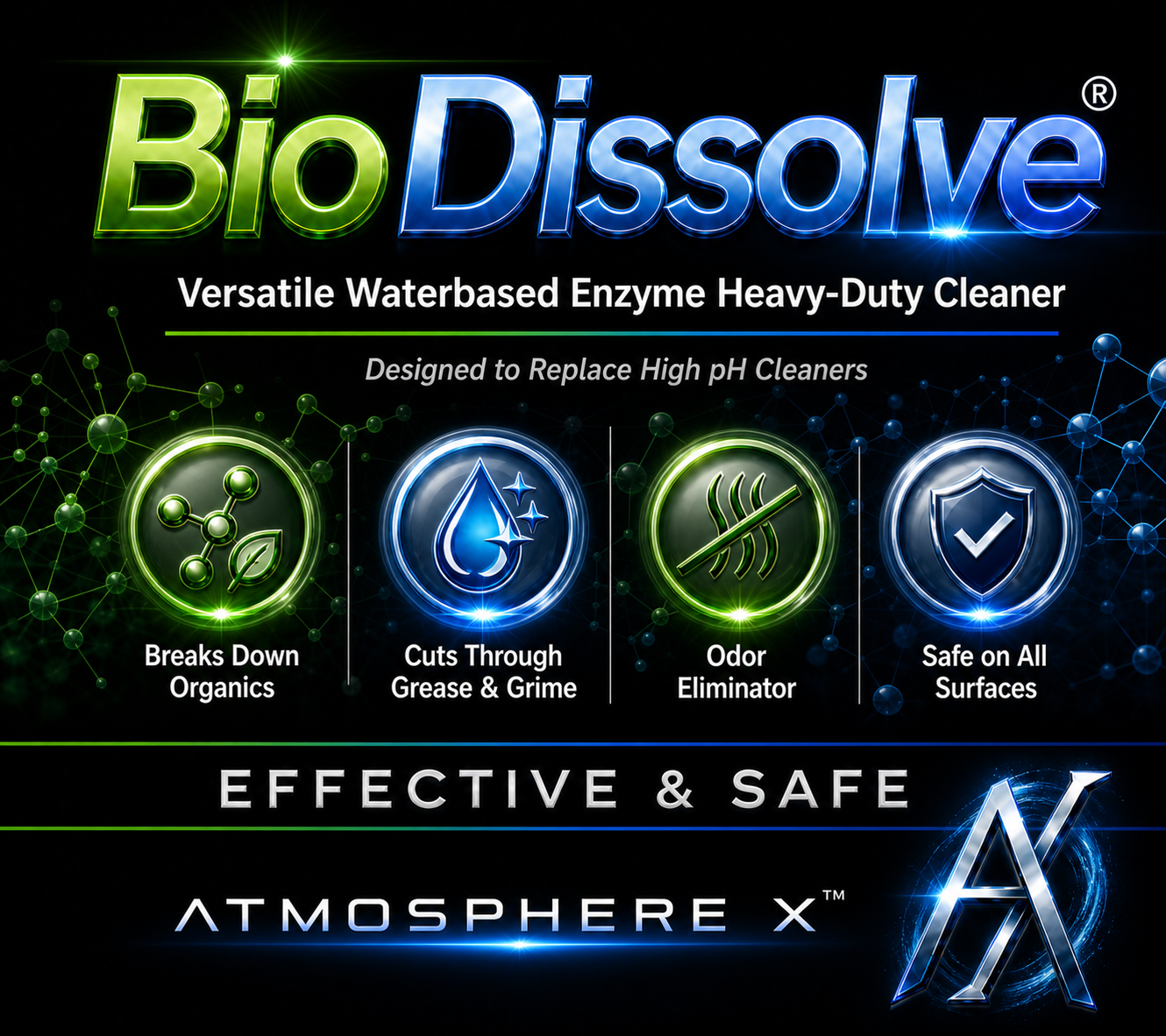
BioDissolve is an enzyme and bacteria-based cleaner designed to break down oils, grease, food residue, soda, coffee, alcohol stains, organic waste, and odor-causing buildup on compatible concrete and hard surfaces. It helps clean porous surfaces more effectively while supporting a safer, more responsible alternative to harsh degreasers and aggressive chemical cleaners.
Enzyme cleaners use biological compounds that help break down organic stains and odor-causing materials into simpler components. They are commonly used on food stains, pet messes, grease, oils, proteins, and odor sources. Better Homes & Gardens describes enzyme cleaners as bio-based cleaners designed to break down organic stains and odors, but also notes they need time and proper conditions to work effectively.
BioDissolve uses a blend of enzyme-producing bacteria designed to break down organic waste, oils, grease, food spills, beverage stains, and odor-causing buildup. Instead of simply pushing contamination around, BioDissolve helps digest the source of the stain so the surface can be rinsed or cleaned more effectively.
Oil stains are difficult because concrete is porous. Once oil, grease, brake fluid, transmission fluid, or food oils soak into the surface, they can be difficult to remove with water alone. Enzymatic and microbial cleaners are often used on concrete because they can break down organic material and stains below the surface instead of only cleaning the top layer. A concrete cleaning guide explains that enzymatic cleaners work on porous concrete by breaking down the stain source at a molecular level.
BioDissolve is designed to clean oil, grease, food, soda, coffee, alcohol, and organic stains from porous concrete surfaces. It is especially useful for driveways, gas stations, convenience stores, sidewalks, dumpster pads, restaurant service areas, warehouses, garages, and commercial concrete.
Yes, enzyme-based cleaners are especially useful for organic stains because enzymes target the source material rather than only masking odor or lifting surface dirt. Different enzymes work on different types of organic messes, including proteins, fats, starches, sugars, and oils.
BioDissolve is ideal for convenience stores, gas stations, restaurants, bars, sidewalks, drive-thru lanes, patios, and service areas because it helps break down common organic stains like soda, coffee, alcohol, food grease, cooking oils, and sticky beverage residue.
Many buyers search for safer alternatives to harsh chemicals, caustic degreasers, acids, solvents, or bleach-based cleaners. EPA’s Safer Choice program exists to help buyers identify cleaning products with safer chemical ingredients without sacrificing performance.
BioDissolve is built for facilities that want effective cleaning without relying only on harsh, high-pH degreasers or aggressive solvents. Its enzyme and bacteria-based cleaning action helps break down organic buildup
BioDissolve helps break down oils, grease, food residue, and organic waste before rinse-down. However, wastewater disposal must always follow local sewer, stormwater, and pretreatment regulations. BioDissolve should be used as part of a responsible cleaning program that keeps oils and contaminated runoff out of storm drains.
Top 5 Calci-Cure SEO FAQs
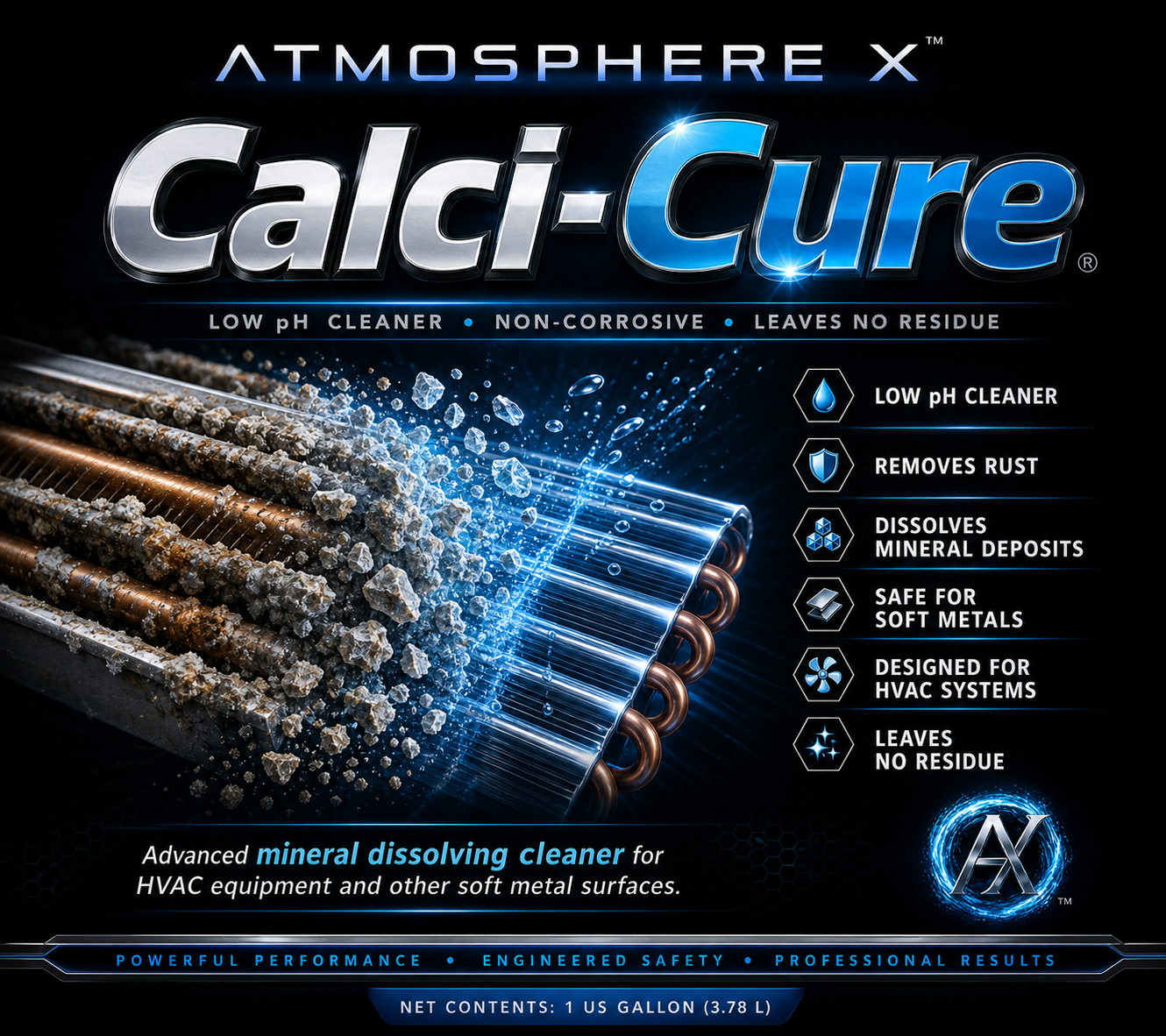
Calci-Cure is a low-pH HVAC mineral dissolver designed to remove calcium, lime scale, rust staining, oxidation buildup, and hard-water deposits from compatible HVAC surfaces. It helps restore cleaner heat-transfer surfaces, leaves no heavy residue, and prepares coils and equipment for better performance and follow-up protection.
White buildup on HVAC equipment is usually caused by hard water minerals, calcium, lime scale, oxidation, rust, cleaning residues, and environmental contaminants. These deposits can collect on coils, condenser surfaces, evaporative cooling equipment, drain pans, and other HVAC components exposed to water, moisture, or mineral-heavy conditions.
Calci-Cure is a low-pH mineral dissolver designed to remove calcium, lime scale, rust staining, and hard-water deposits from compatible HVAC surfaces. It helps restore cleaner surfaces without leaving heavy residue behind.
This is the broad educational FAQ. It captures “what is this white stuff on my coil?” and “how do I remove calcium buildup?”
Yes. Deposits on HVAC coils and heat-transfer surfaces can reduce efficiency by limiting heat transfer and forcing equipment to run longer. The U.S. Department of Energy explains that dirt buildup on evaporator coils reduces heat-absorbing capacity, while ENERGY STAR says dirty coils reduce cooling ability, increase runtime, raise energy costs, and reduce equipment life.
Calci-Cure helps remove mineral scale, rust staining, and hard-water buildup that can interfere with heat transfer. Cleaner HVAC surfaces allow the system to operate closer to its intended performance, especially when followed by proper maintenance and protection.
This is the performance question. Tie it directly to heat transfer.
The best cleaner depends on the surface material, deposit type, system design, and manufacturer guidance. For HVAC maintenance, the cleaner should dissolve mineral buildup while being compatible with the metals and components being cleaned. Industrial descaling products are commonly used to break down calcium, limescale, rust, and mineral deposits that restrict flow or reduce efficiency.
Calci-Cure is designed for HVAC technicians and maintenance teams that need to remove rust stains, calcium, lime scale, and mineral deposits from compatible HVAC surfaces. It is especially u
This is a key trust question. Many acidic cleaners can be aggressive, especially on aluminum, copper, galvanized metals, coatings, and sensitive HVAC components. The safest answer is that compatibility depends on concentration, dwell time, dilution, surface condition, rinsing, and manufacturer recommendations.
Calci-Cure is formulated as a low-pH cleaner designed for HVAC use and soft-metal compatibility when used according to directions. It should be applied with proper dilution, dwell time, rinsing, and surface compatibility review, especially on aluminum, copper, coated coils, and sensitive components.
Yes, proper HVAC maintenance can support longer equipment life. ENERGY STAR states that dirty coils make systems run longer, increase energy costs, and reduce equipment life. Scale buildup and deposits can also make heat exchangers and similar systems less efficient by reducing heat transfer.
Calci-Cure supports longer-lasting HVAC performance by helping remove the mineral deposits, rust staining, and scale buildup that can make equipment work harder. Cleaner surfaces reduce maintenance stress and prepare the system for follow-up protection such as ThermalX.