
Exterior Treatments
Atmosphere X takes a proactive approach to energy savings and indoor air quality enhancement.
Top 5 ConcreteX FAQs
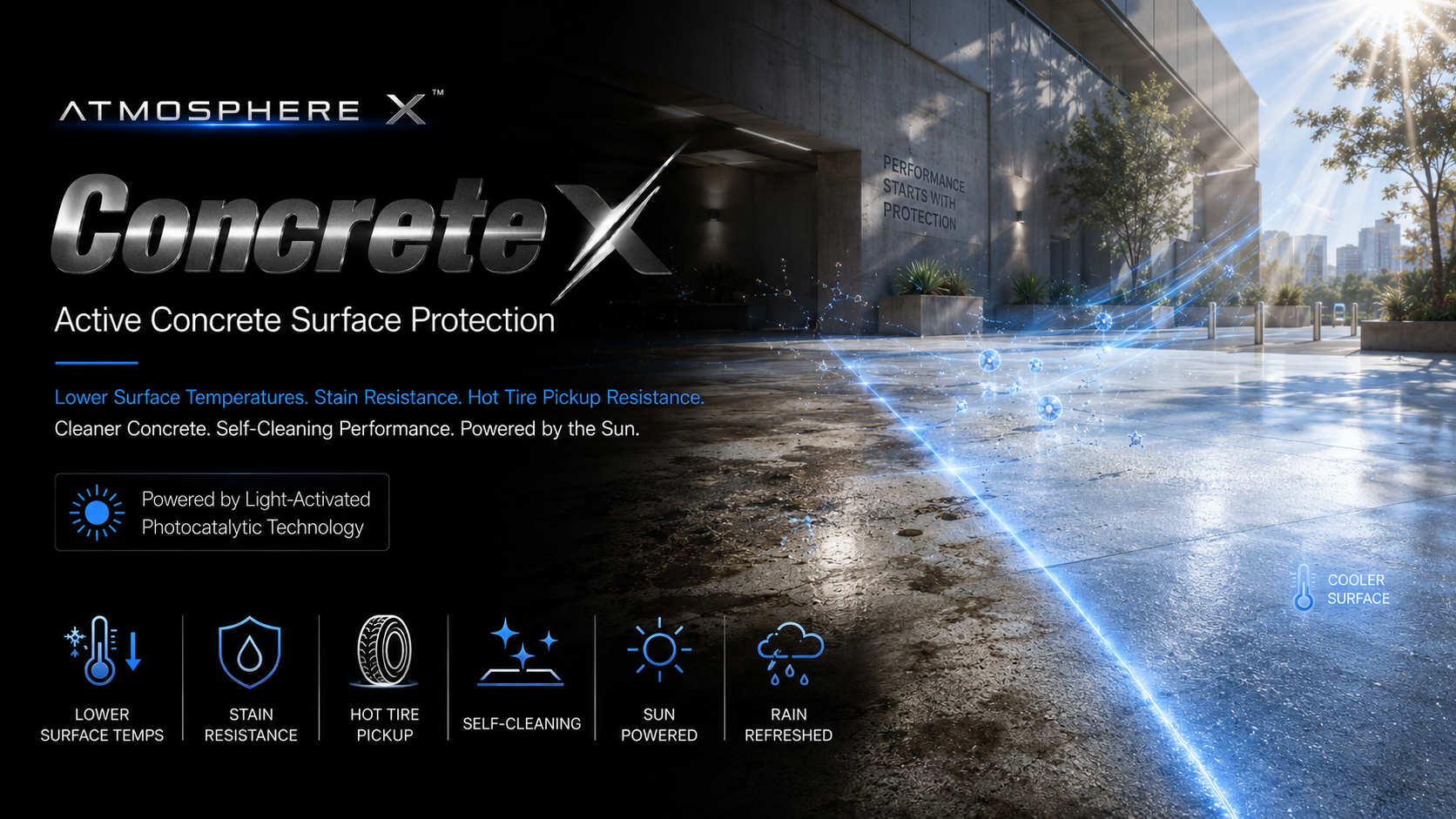
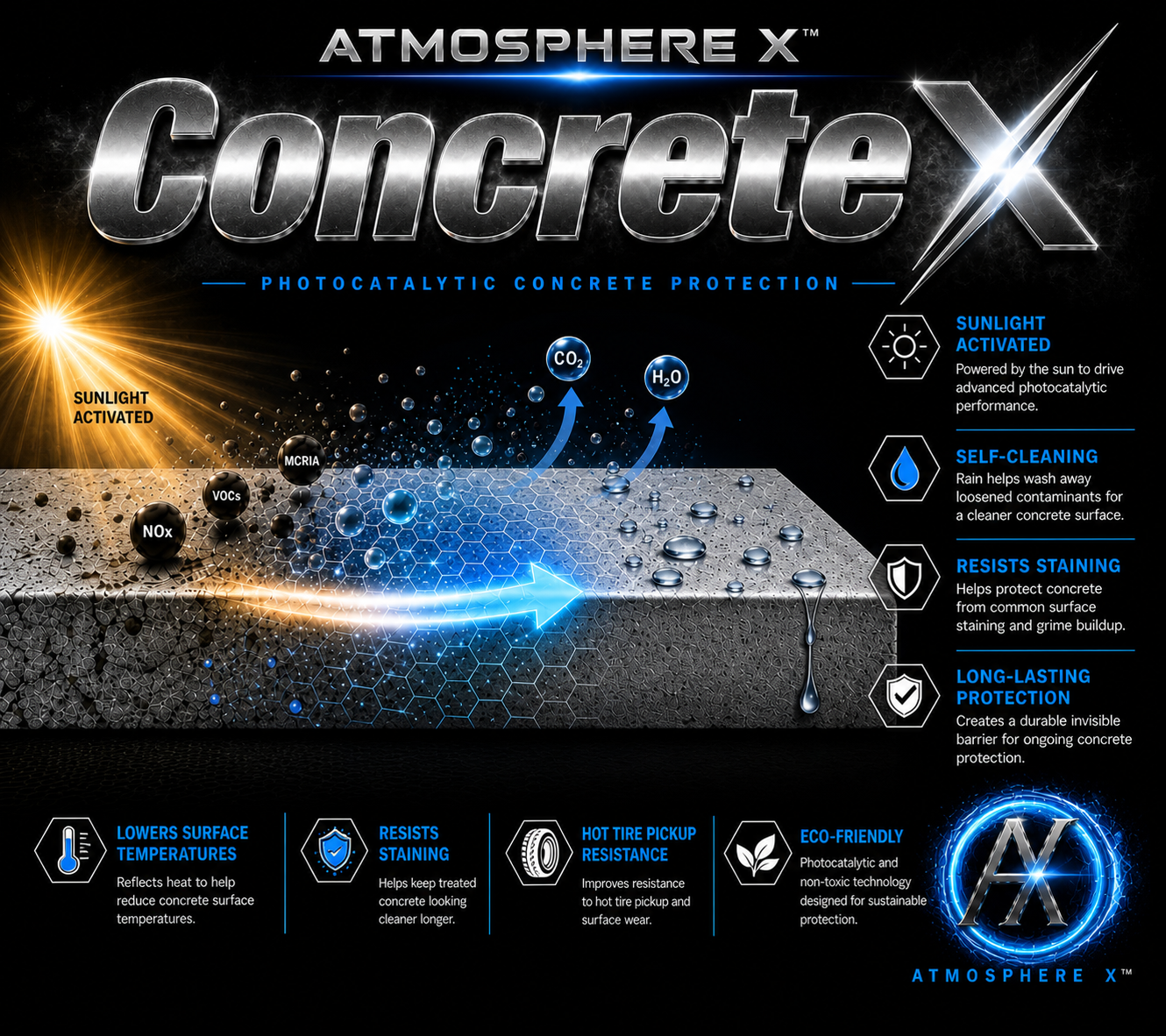
ConcreteX is a light-activated concrete surface treatment designed to protect compatible concrete from staining, oil penetration, hot tire pickup, water intrusion, dirt buildup, and heat absorption. It helps preserve driveways, sidewalks, patios, pool decks, gas stations, service areas, and commercial concrete while making treated surfaces easier to maintain.
Yes. Concrete is porous, so water, oil, chemicals, dirt, deicing salts, and organic stains can penetrate into the surface. Sealers help reduce absorption and protect against surface damage, staining, and weather-related wear. A 2025 Washington Post home-maintenance article notes that sealers can help block water infiltration, reduce UV damage, protect against stains, and help maintain a cleaner appearance.
ConcreteX is designed to protect compatible concrete surfaces by helping reduce penetration from oil, grease, antifreeze, transmission fluid, water, dirt, and other common contaminants. Instead of allowing stains to soak deep into the concrete, ConcreteX helps create a protective surface layer that makes maintenance easier.
A good concrete sealer can help reduce oil penetration, but the level of protection depends on the type of sealer, surface condition, and how quickly spills are cleaned. Penetrating sealers can protect against water and salts, while surface sealers generally provide better stain resistance but may need more maintenance.
ConcreteX is ideal for driveways, garages, gas stations, convenience stores, service bays, sidewalks, patios, and commercial concrete areas because it helps prevent oils and fluids from penetrating into the concrete surface. Spills should still be cleaned promptly, but ConcreteX gives the surface a stronger first line of defense.
Hot tire pickup usually happens when warm vehicle tires soften, pull, or bond with certain surface coatings, leaving marks, peeling, or discoloration. It is especially common with some topical coatings that sit on the surface instead of bonding properly or penetrating into the concrete. Penetrating sealers are often preferred for driveways because they are less likely to peel, chip, delaminate, or suffer hot tire pickup issues.
ConcreteX is designed to resist hot tire pickup on compatible concrete surfaces by helping protect the surface without creating a weak, easily lifted film. This makes it a strong option for driveways, garages, parking areas, gas stations, auto shops, and other surfaces exposed to vehicle traffic.
Yes, surface temperature can be affected by reflectivity, color, solar absorption, and surface technology. EPA explains that cool pavement technologies can reduce heat islands by increasing reflectivity or supporting cooling effects. EPA also notes that communities evaluating cool pavements often look beyond temperature reduction alone and consider added benefits such as stormwater and water-quality impacts. Lawrence Berkeley National Laboratory explains that dark pavements get hot because they absorb 80–95% of sunlight, contributing to urban heat buildup.
ConcreteX is designed to help lower concrete surface temperatures by improving the way treated surfaces interact with sunlight. For patios, sidewalks, pool decks, driveways, commercial entrances, and gas station concrete, lower surface temperature can improve comfort and reduce heat buildup around the property.
The best concrete sealer depends on the surface, exposure, traffic, desired appearance, and performance needs. For driveways and commercial concrete, people usually want stain resistance, water protection, hot tire resistance, UV stability, easy maintenance, and long-term durability. Some topical sealers can improve stain resistance but may become slippery or require more frequent reapplication, while penetrating options are often valued for durability and lower peeling risk.
ConcreteX is built for high-use concrete areas where protection, heat reduction, stain resistance, and appearance all matter. It is a strong fit for driveways, sidewalks, patios, pool decks, gas stations, convenience stores, warehouses, schools, hospitals, commercial entrances, and service areas.
Top 5 ExteriorX FAQs
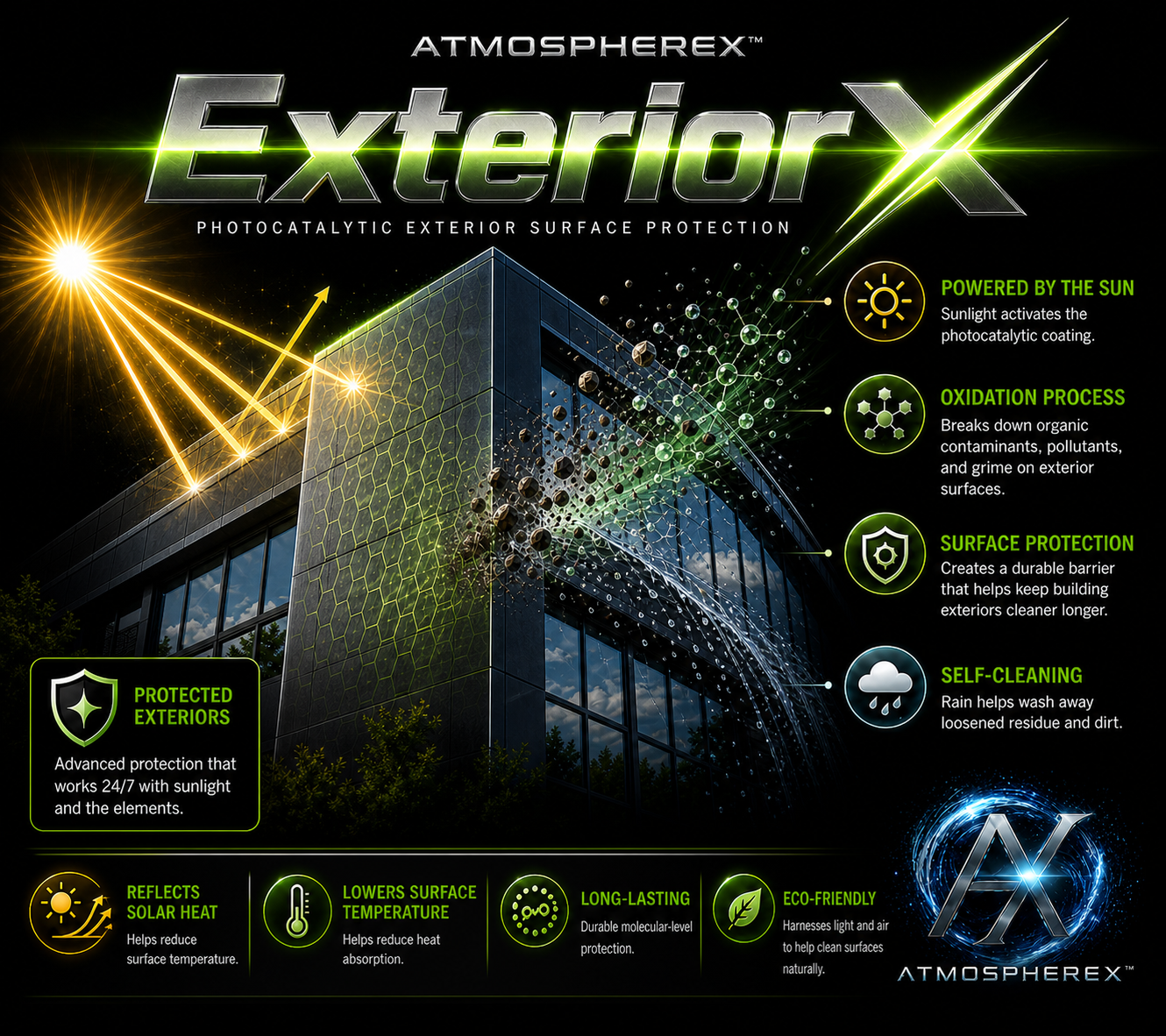
ExteriorX is a light-activated exterior surface treatment designed to help compatible building surfaces stay cooler, cleaner, and better protected from sun, pollution, dirt, organic buildup, and weathering. Applied to compatible exterior walls, windows, stucco, masonry, painted surfaces, and commercial building materials, ExteriorX helps reduce heat absorption, supports self-cleaning surface activity, and helps preserve long-term building appearance.
Yes. Exterior walls absorb solar heat, especially in hot, sunny climates. Lawrence Berkeley National Laboratory explains that raising wall albedo, or solar reflectance, lowers wall surface temperature in the sun and reduces daytime heat flow into the building. This can save energy in air-conditioned buildings or make uncooled buildings more comfortable.
ExteriorX is designed to help exterior building surfaces reflect more solar energy and absorb less heat. On compatible walls, windows, painted surfaces, stucco, masonry, and commercial exterior materials, ExteriorX can help reduce surface heat buildup and support cooler, more comfortable buildings.
Yes, depending on climate, building design, wall exposure, insulation, and HVAC use. The California Energy Commission states that raising the solar reflectance of building walls reduces unwanted solar heat gain during the cooling season, saving electricity and lowering peak power demand by reducing air-conditioning needs. It can also help mitigate urban heat island effects.
ExteriorX helps turn exterior walls into a more energy-conscious building surface by reducing solar heat absorption. In hot climates, this may help lower cooling demand, reduce peak HVAC strain, and improve comfort inside the building.
Yes. Building facades collect dirt, dust, pollution, algae, mineral residue, organic matter, and weather staining. Photocatalytic facade coatings have been studied for self-cleaning performance, and research notes that titanium dioxide and silicon dioxide based coatings can help maintain facade functionality over time.
ExteriorX is a light-activated exterior treatment designed to help treated surfaces stay cleaner longer. When exposed to natural light, the treated surface helps break down organic buildup and allows rain or routine washing to remove dirt and pollutants more easily.
Photocatalytic building materials have been researched for air-purification potential. A 2024 review describes TiO₂ photocatalysis as a pathway for developing self-cleaning and air-purifying building envelope components. Photocatalytic facade materials have also been used in real-world building projects marketed around self-cleaning and pollution-reducing exterior surfaces.
ExteriorX uses light-activated photocatalytic surface technology to support cleaner exterior environments. On compatible exterior surfaces, it is designed to help reduce organic buildup and support air-purifying surface activity when activated by natural light.
Yes, when appearance, energy use, maintenance cost, surface life, and brand image matter. Exterior wall coatings can help protect buildings from UV exposure, moisture, pollution, temperature swings, and weathering. They can also reduce cleaning frequency and help preserve curb appeal. Lawrence Berkeley National Laboratory notes that cool-wall technologies can provide annual energy savings, peak demand reduction, emissions reduction, and summer heat-island mitigation benefits in many climates.
ExteriorX is worth considering for buildings where heat, exterior staining, maintenance cost, pollution exposure, and appearance all matter. It helps protect compatible exterior surfaces while supporting cooler walls, cleaner facades, and longer-lasting building appearance.