
HVAC
Atmosphere X takes a proactive approach to energy savings and indoor air quality enhancement.
Top 5 ThermalX FAQs
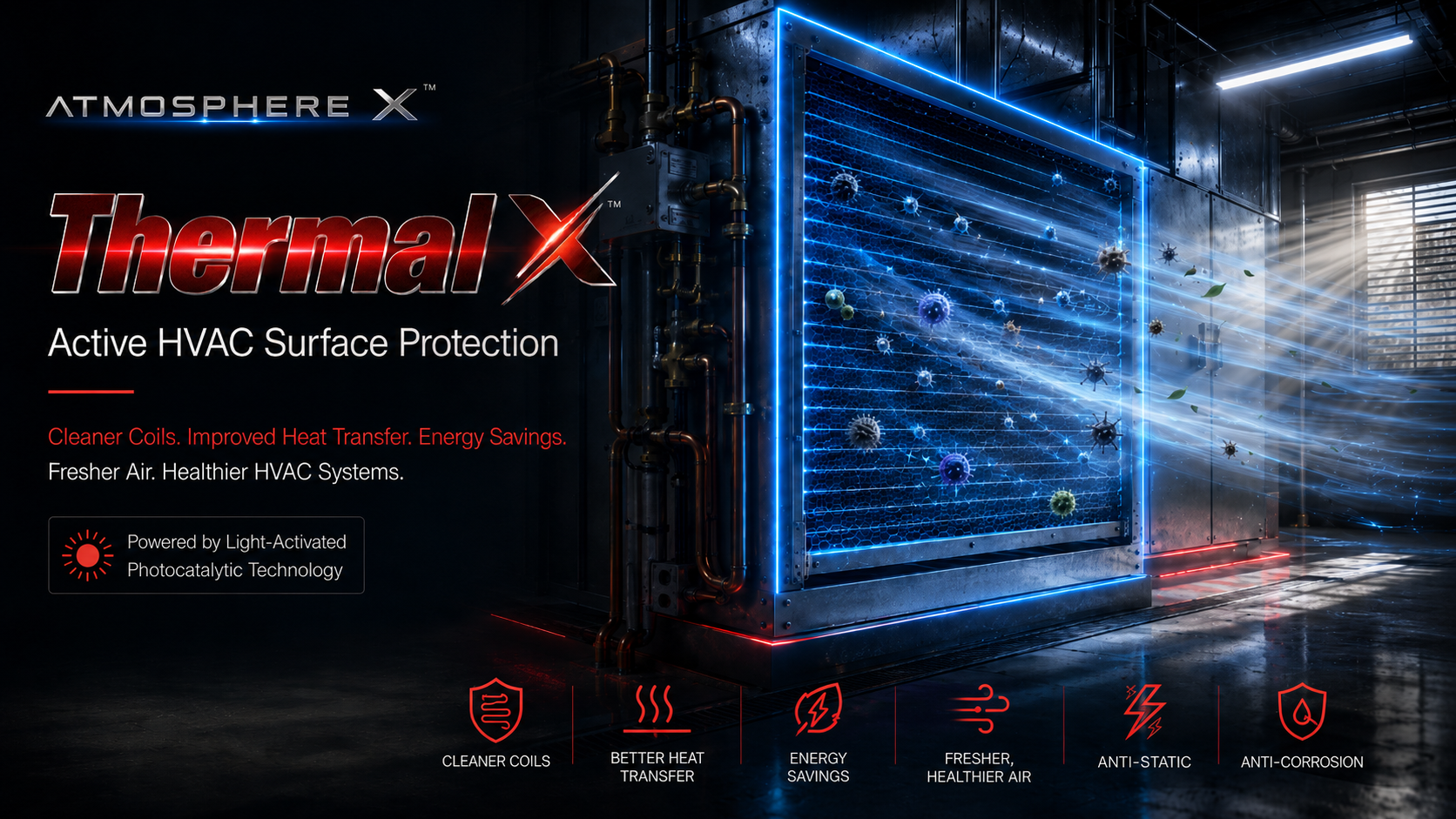
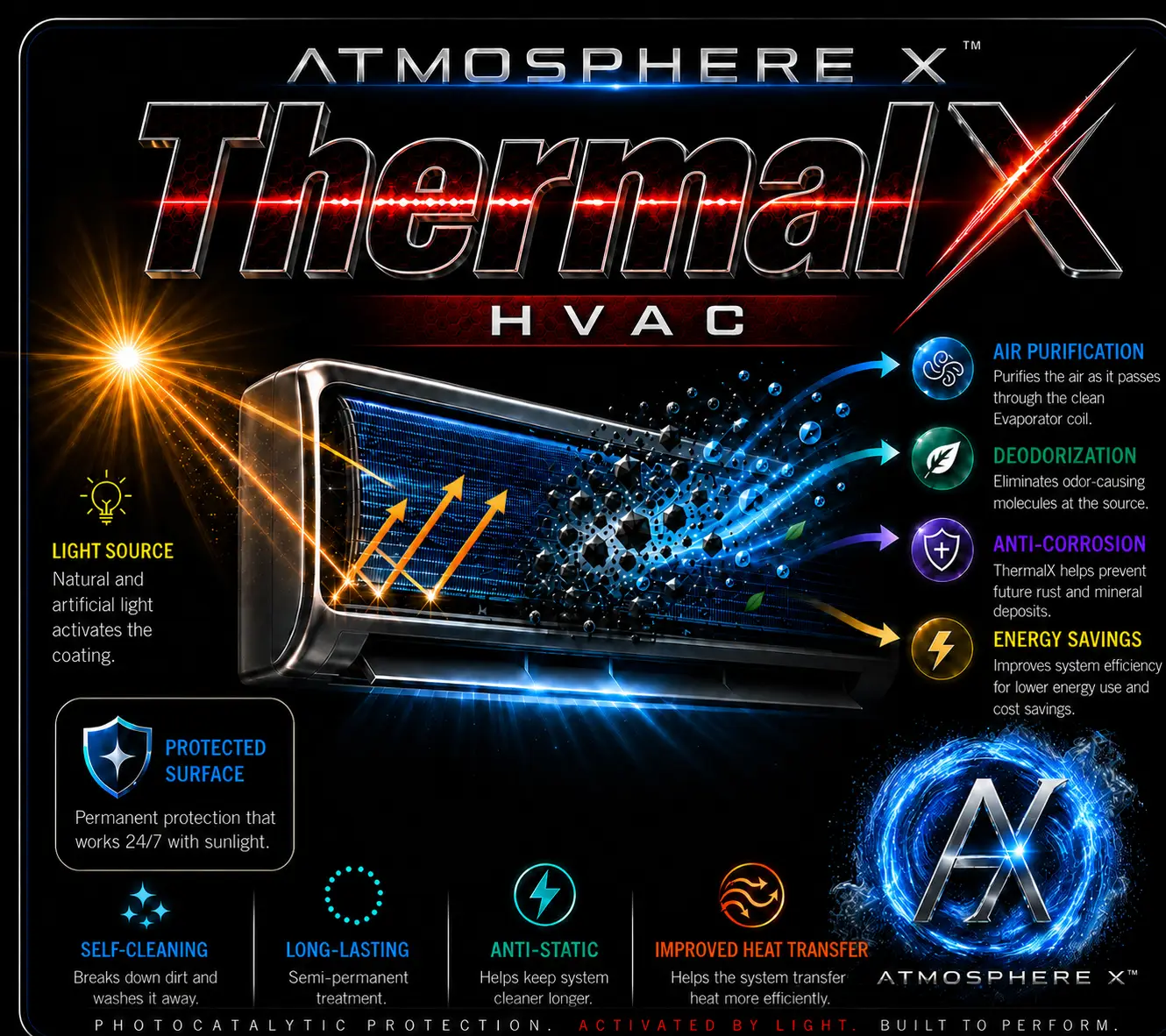
ThermalX is a light-activated HVAC surface treatment designed to support cleaner coils, improved heat transfer, anti-static performance, anti-corrosion protection, and better indoor air quality. Applied after proper HVAC cleaning, ThermalX helps compatible coils and internal HVAC surfaces stay cleaner longer, reducing system strain and supporting more efficient cooling performance.
The most common HVAC energy-efficiency advice is to replace dirty filters, keep coils clean, maintain airflow, tune equipment regularly, seal ducts, and keep the system properly maintained. The U.S. Department of Energy says dirty, clogged filters reduce airflow and efficiency, and that dirt can bypass the filter and collect on the evaporator coil, reducing its heat-absorbing capacity. ENERGY STAR also recommends changing filters regularly and getting yearly HVAC tune-ups to improve efficiency and comfort.
ThermalX is designed to support HVAC energy efficiency by helping treated coils and compatible HVAC surfaces stay cleaner longer, improving heat transfer, reducing system strain, and supporting more efficient cooling performance.
Yes. Dirty evaporator and condenser coils can reduce heat transfer and force the HVAC system to run longer or harder to reach the same temperature. The Department of Energy explains that dirt buildup on the evaporator coil reduces heat-absorbing capacity, which hurts performance and efficiency.
ThermalX helps protect clean HVAC coils by creating a treated surface that resists buildup and supports better heat transfer. Cleaner coils can help the system operate with less strain, which may reduce energy usage and help extend equipment life.
Yes. HVAC systems are part of the indoor air quality equation because they move, filter, condition, and circulate air throughout a building. EPA explains that indoor air quality can be improved through source control, ventilation, and filtration, and that HVAC filters can reduce indoor air pollution, although they cannot remove all pollutants from the air.
ThermalX supports indoor air quality by treating compatible HVAC surfaces, including clean evaporator coils, where air passes through the system. As part of a layered IAQ strategy, ThermalX works alongside filtration, ventilation, cleaning, and routine HVAC maintenance.
The standard answer is regular filter changes, professional maintenance, coil cleaning, proper airflow, and keeping debris away from outdoor equipment. DOE emphasizes filter maintenance because dirty filters reduce airflow and allow dirt to accumulate on the evaporator coil.
ThermalX is applied after the HVAC coil has been properly cleaned. Once treated, the light-activated surface helps reduce future buildup, supports anti-static performance, and helps keep the system cleaner longer between maintenance cycles.
Coils and HVAC components are exposed to moisture, dust, airborne particles, cleaning residues, minerals, and environmental contaminants. Over time, these can contribute to buildup, corrosion, reduced airflow, reduced heat transfer, and maintenance problems. ASHRAE’s filtration and air-cleaning position document discusses filtration and air-cleaning as part of broader indoor air quality and HVAC system performance considerations.
ThermalX is designed to support anti-corrosion and anti-static performance on compatible HVAC surfaces. By helping reduce buildup and helping protect treated surfaces from future rust and mineral deposits, ThermalX supports cleaner operation, better airflow, and longer-lasting HVAC performance.
Water Chiller Energy & Water Savings FAQs
A water chiller usually starts wasting energy when heat transfer becomes restricted. Scale, rust, mineral deposits, biofilm, and dirty heat exchanger surfaces create a barrier between the water and the metal surface. That forces the chiller to run longer and work harder to maintain the same temperature. ASHRAE notes that fouling can negatively affect condenser tube heat-transfer performance, and industry maintenance guidance has estimated that even a thin fouling layer can significantly reduce chiller efficiency.
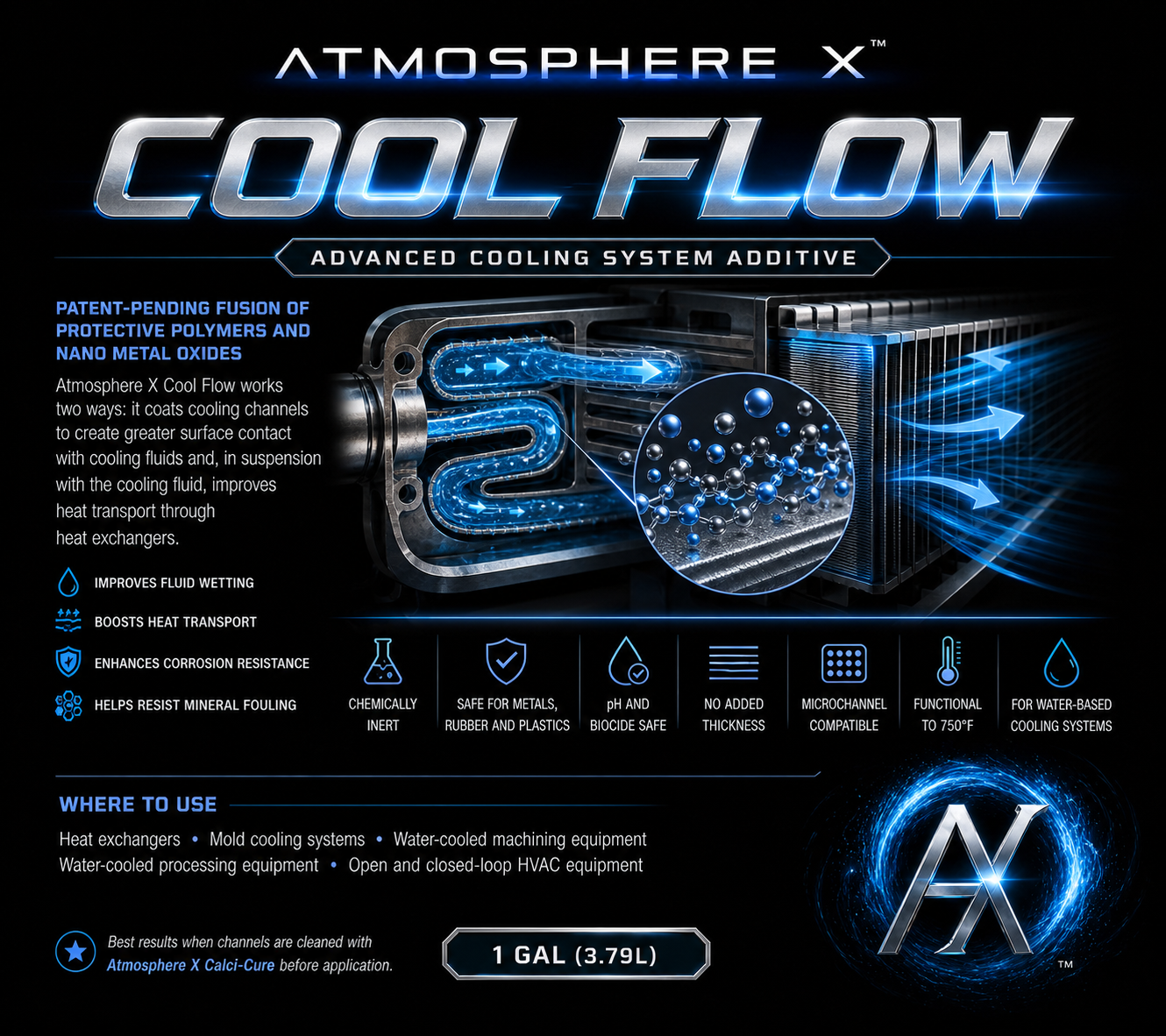
Cool Flow is designed to help support better fluid contact and heat movement after the system has been properly cleaned, helping the chiller operate closer to its intended performance.
The best way to reduce chiller energy costs is to improve the system’s ability to move heat. That means cleaning scale and mineral deposits, maintaining proper water chemistry, checking flow rates, cleaning heat exchangers, optimizing setpoints, and keeping the condenser water loop performing efficiently.
Cool Flow fits into this process after cleaning. The goal is simple: better water-to-surface contact, better heat transfer, and less wasted energy. When the cooling fluid can make stronger contact with internal surfaces, the system can transfer heat more efficiently instead of forcing the compressor, pump, and cooling tower to compensate.
Yes. Scale and mineral buildup do not just hurt energy performance — they can also contribute to water waste. In cooling tower systems, poor water quality, fouling, and mineral concentration often lead to increased blowdown, more makeup water, and more frequent system maintenance. The EPA’s WaterSense guidance explains that cooling tower water efficiency depends heavily on maximizing cycles of concentration and minimizing unnecessary blowdown.
Cleaner water channels and better heat transfer help the system do more with the water already in the loop.
For water-cooled chillers with cooling towers, water is typically lost through evaporation, drift, leaks, and blowdown. Evaporation is part of how cooling towers work, but blowdown and makeup water can often be reduced through better water treatment, cleaner heat exchangers, tighter system control, and higher stable cycles of concentration.
The U.S. Department of Energy notes that increasing cooling tower cycles of concentration from three to six can reduce makeup water by about 20% and blowdown by about 50%, when system chemistry allows it.
The practical strategy is: clean the system, stabilize the water chemistry, improve heat transfer, reduce fouling, and monitor conductivity, makeup water, and blowdown rates.
ThermalX is applied after the HVAC coil has been properly cleaned. Once treated, the light-activated surface helps reduce future buildup, supports anti-static performance, and helps keep the system cleaner longer between maintenance cycles.
Cool Flow is an advanced nano-tech cooling system enhancer for water-based systems. It is designed to work in two ways: by improving the relationship between the cooling fluid and internal system surfaces, and by supporting better heat movement through heat exchangers. In your brochure, the process is positioned as Clean, Treat, Optimize — remove scale and deposits first, add Cool Flow, then support improved thermal contact, heat movement, and system protection.
For water chillers, that message becomes powerful:
A cleaner system transfers heat better. Better heat transfer lowers wasted energy. Less fouling can reduce unnecessary water waste, maintenance, and system strain.
This is the core Cool Flow advantage: help the chiller move heat more efficiently instead of forcing the equipment to work harder.