
Solar Panels
Atmosphere X takes a proactive approach to energy savings and indoor air quality enhancement.
Top 5 SolarX FAQs
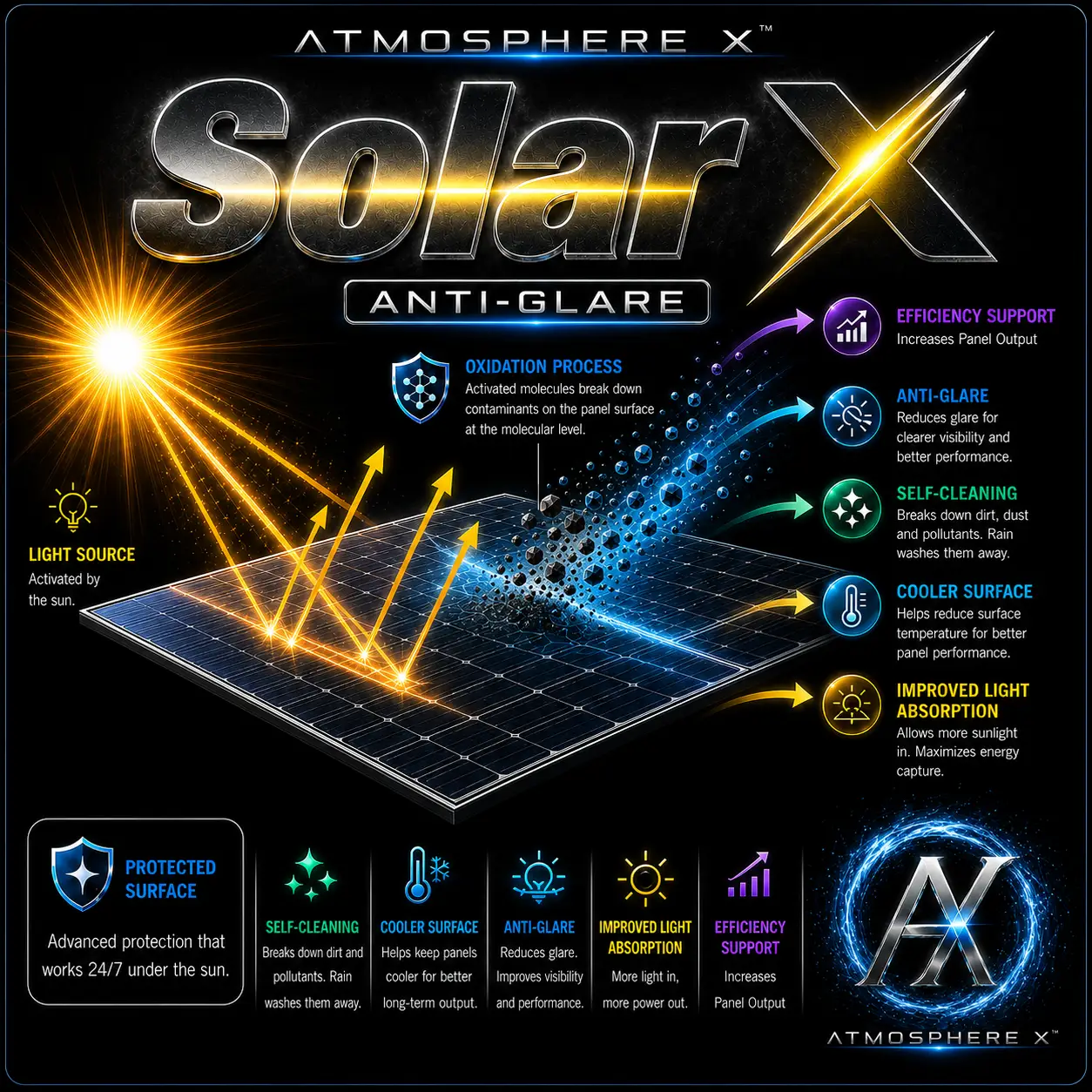
SolarX is a light-activated solar panel surface treatment designed to help panels stay cleaner, reduce glare, lower surface heat buildup, and support stronger energy output. By helping reduce dust, pollen, dirt, bird droppings, and environmental buildup on compatible solar glass, SolarX helps protect solar performance between routine cleanings.
Yes. Dust, pollen, pollution, bird droppings, soot, hard water residue, and other surface contaminants can reduce the amount of sunlight reaching the photovoltaic cells. NREL notes that natural soiling reduces PV energy output because material deposits on PV surfaces reduce light reaching the module. NREL has also reported that rain is not always enough to fully remove pollen from solar panels.
SolarX is designed to help solar panel glass stay cleaner longer by reducing surface buildup from dust, pollen, dirt, bird droppings, and environmental contaminants. Cleaner panel surfaces allow more sunlight to reach the solar cells, supporting stronger energy production over time.
Soiling losses vary by location, climate, tilt angle, rainfall, pollution, dust, pollen, and maintenance frequency. NREL research has found PV soiling losses can range from 0–6% in parts of the United States and can reach 20–80% in very dusty regions. Another study found up to 13% power loss in panels left dusty for three months compared with panels cleaned daily.
SolarX helps reduce performance losses caused by soiling by creating a treated surface that is easier to keep clean. In dusty, dry, agricultural, industrial, desert, coastal, or high-pollen environments, reducing panel soiling can help protect solar output and improve system return on investment.
Yes. Solar panels need sunlight, but excess heat can reduce electrical output. Most panels are rated at standard test conditions around 25°C / 77°F, and many panels lose a fraction of a percent of output for each degree Celsius above that point. This is commonly described as the panel’s temperature coefficient.
SolarX is designed to help solar panels operate cleaner and cooler by reducing surface buildup and supporting better interaction with sunlight. Lower surface heat and cleaner glass can help protect panel performance, especially in hot, sunny climates where solar output is often limited by high panel temperatures.
Yes, anti-reflective coatings are commonly used to reduce light reflection and increase light transmission through solar module glass. DuraMAT states that typical anti-reflection coatings can increase light transmission by about 3%, and that these coatings are used on the air-glass interface of most PV modules.
SolarX is designed to reduce glare and support better light interaction at the panel surface. By helping more usable sunlight reach the photovoltaic cells while reducing surface contamination, SolarX supports stronger panel performance without changing the solar system itself.
Cleaning frequency depends on location. Panels in dry, dusty, agricultural, coastal, industrial, wildfire-prone, or high-pollen areas may need more frequent maintenance. NREL’s pollen study shows that rain alone may not always restore performance after certain types of soiling.
SolarX helps reduce the need for aggressive cleaning by making treated solar panel surfaces easier to maintain. It is not a substitute for inspection or maintenance, but it can help panels stay cleaner between cleanings and support more consistent energy production.